

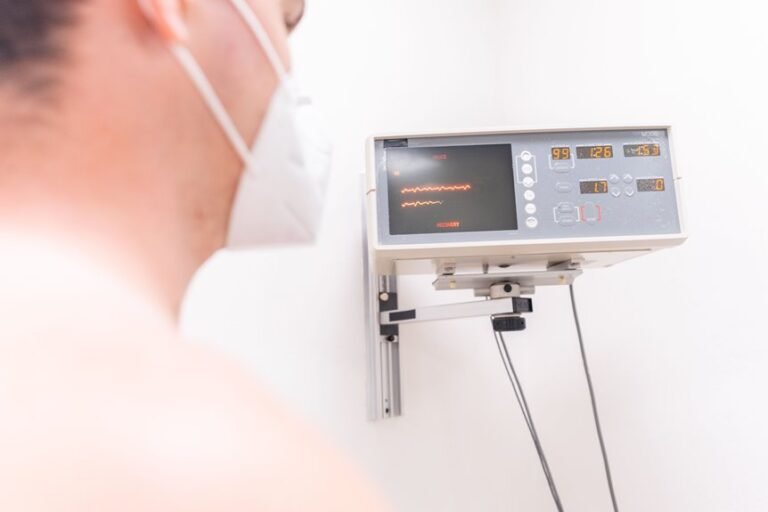
VertexPulse Verification Chamber combines three models with a deployment across a specific instance and support numbers to enable a unified validation workflow. The setup promises real-time analytics, anomaly detection, and closed-loop actions while balancing compact, redundant, and scalable traits. Its governance emphasizes least-privilege access and interoperable services for diverse teams. Questions remain about practical deployment, security boundaries, and orchestration across components, inviting a focused assessment of readiness and governance implications.
What Is Vertexpulse Verification Chamber and Why It Matters
VertexPulse Verification Chamber is a diagnostic and calibration system used to validate the performance and integrity of VertexPulse devices. It delivers VertexPulse Verification through objective testing, detailing Chamber Capabilities, and enabling real time Analytics. The framework supports Closed loop Validation, ensures Integration Security, and relies on a Scalable Architecture for adaptable, reliable assessments across diverse deployments.
How Models 3175504434, 6062033135, and 8622911513 Differ in Capability
The three models—3175504434, 6062033135, and 8622911513—exhibit distinct capability profiles within the VertexPulse Verification Chamber.
Each model demonstrates varied sensor suites, processing throughput, and adaptability to configurations.
Model capability diverges in deployment differences: 3175504434 favoring compact deployments, 6062033135 prioritizing redundancy, and 8622911513 emphasizing scalable integration.
Across use cases, these differences guide selection and risk-aware implementation.
Real-Time Analytics and Closed-Loop Validation in Practice
Real-time analytics translate sensor data into immediate operational insights, enabling the VertexPulse Verification Chamber to detect anomalies, flag deviations, and trigger corrective actions within seconds.
Real time analytics empower ongoing monitoring, while closed loop validation ensures measured outcomes align with targets, enabling rapid verification cycles, reproducible results, and disciplined adjustments that sustain performance without human bottlenecks or ambiguity.
Integration, Security, and Scalable Architecture for Teams
Integration, security, and scalable architecture for teams builds on real-time analytics by outlining how multiple stakeholders interact with the VertexPulse Verification Chamber.
The framework emphasizes integration governance, modular interfaces, and interoperable services to enable autonomous collaboration.
It preserves a visible security posture, enforces least privilege, and supports scalable workflows while maintaining clarity, adaptability, and freedom of experimentation across diverse teams.
Frequently Asked Questions
What Is the Typical Maintenance Window for Vertexpulse Chambers?
The typical maintenance window is defined by a scheduled downtime aligned with calibration interval expectations; during this period, VertexPulse chambers undergo calibration, system checks, and updates to ensure ongoing accuracy and reliability.
How Long Is the Data Retention Period for Logs?
Data retention is configurable, with logs preserved for defined periods before automatic pruning; offline operation does not inherently extend retention, and retention policies vary by deployment, regulatory needs, and administrative settings across VertexPulse chambers.
Can the System Operate Offline Without Network Access?
The system cannot operate offline for extended periods; offline operation is limited. It relies on network access for core functions, and prolonged disconnection increases risk. Network dependence remains integral for data integrity and real-time processing, even in autonomy modes.
What Is the Average Calibration Interval Recommended?
Average calibration interval should align with calibration scheduling guidelines and equipment usage, typically quarterly or semi-annually depending on environmental conditions and drift tolerance; maintain consistent maintenance cadence to preserve accuracy and system autonomy within acceptable freedom.
Are There Any Known Compatibility Issues With Legacy Hardware?
There are compatibility issues with legacy hardware, though results vary by model. The system exhibits intermittent integration challenges, requiring careful assessment of interfaces and firmware alignment to ensure stable operation and minimize performance degradation.
Conclusion
The VertexPulse Verification Chamber blends compact, redundant, and scalable models into a single, ever-watchful system. As sensors murmur in parallel, it narrates a cautionary fable of efficiency: less is more, but only if governance is lean and audits are tooth-combed. In satire’s whisper, teams chase flawless validation while coffee cools and logs pile up. Ultimately, risk-aware deployment remains the ledger, and real-time corrections become the punchline.