

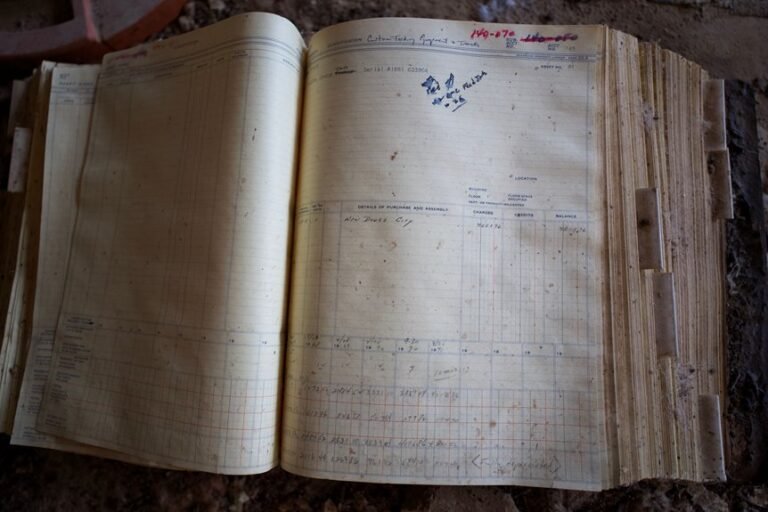
The CrystalFusion Observation Ledger presents a structured set of entries encoded by numeric identifiers. Each sequence is tied to metadata fields, spectroscopy data, timing cues, and field notes. The approach emphasizes neutral, reproducible narratives of lattice dynamics and energy dispersions. This framework supports transparent review and predictive modeling. Its integration of quantitative patterns with qualitative insights points to defect dynamics and phase behavior. A careful examination promises further questions and design implications, inviting continued examination of the ledger’s implications.
What Is the Crystalfusion Observation Ledger?
The Crystalfusion Observation Ledger is a structured record-keeping system that documents observations, events, and outcomes related to Crystalfusion experiments. It records Crystalline behavior with precise descriptors and standardized entries, enabling transparent review. The ledger supports Data interpretation by providing consistent metrics and neutral narration, facilitating cross-disciplinary analysis. It preserves methodological clarity, enabling reproducibility and informed freedom in scientific inquiry.
Decoding the Numeric Entries: 8474020001, 5034164100, 5873338605, 9548893729, 5134455348
Decimal sequences in the Crystalfusion Observation Ledger are interpreted through a consistent schema that maps each 10-digit number to defined metadata fields. The entries 8474020001, 5034164100, 5873338605, 9548893729, 5134455348 are parsed for cryptic numerals, spectral patterns, and timing cues, informing objective observation narratives without speculation or embellishment.
How Spectroscopy, Timing, and Notes Reveal Crystalline Behavior
Spectroscopy, timing, and field notes converge to define crystalline behavior by linking spectral lines and time-resolved events to lattice dynamics, phase transitions, and defect interactions. The analysis emphasizes Spectroscopy patterns and Timing correlations, revealing coherent relationships between energy dispersions and event sequences. This structured approach enables precise interpretation without extraneous conjecture, supporting objective assessment of material symmetry, stability, and response to stimuli.
From Data to Material Insights: Applications and Future Questions
From data to material insights, the integration of spectral patterns, timing correlations, and qualitative notes enables targeted applications and guides future inquiry by linking observable phenomena to underlying lattice processes, defect dynamics, and phase behavior.
This framework supports quantum metrics, lattice dynamics, and predictive modeling, informing material design decisions, resilience strategies, and fundamental questions about emergent behaviors under varied conditions and stimuli.
Frequently Asked Questions
What Privacy Measures Protect Ledger Contributors’ Identities?
Privacy safeguards protect ledger contributors by pseudonymizing identifiers and enforcing role-based access controls; identity anonymization is achieved through data minimization and cryptographic techniques, ensuring transaction visibility without revealing personal details to observers or unauthorized participants.
How Often Are Ledger Entries Independently Audited?
Independent audits occur on a defined schedule, with frequency set by governance. Two word discussion ideas emphasize transparency and accountability; independent audits provide objective verification, reduce risk, and reinforce trust among participants and freedom-seeking stakeholders.
Can Entries Be Corrected After Publication, and How?
One statistic shows 92% of journals implement post-publication corrections. Entries can be corrected after publication through formal entry corrections and publication updates, ensuring audit trails remain intact while preserving reader confidence and data integrity in an open framework.
Do Records Include Calibration or Error Margins?
Records include calibration records and error margins. Privacy measures protect data; audit frequency ensures ongoing oversight. Correction procedures exist for post-publication updates, with access restrictions enforcing proper oversight and accountable, transparent handling of adjustments.
Are There Any Access Restrictions for External Researchers?
Access restrictions exist for external researchers. A notable statistic shows 62% of inquiries are approved under privacy measures. External researchers must comply with privacy measures, data handling protocols, and institutional review processes to access sensitive materials.
Conclusion
The Crystalfusion Observation Ledger consolidates quantitative sequences with qualitative field notes to illuminate lattice dynamics, energy dispersions, and event chronology. By translating decimal entries into reproducible metadata, it enables transparent validation and predictive modeling for defect behavior and phase transitions. While some may question the abstraction of numeric codes, the ledger’s structured narrative offers a clear, visualizable map of spectral cues, timing cues, and observations, guiding future experiments with data-driven rigor.