

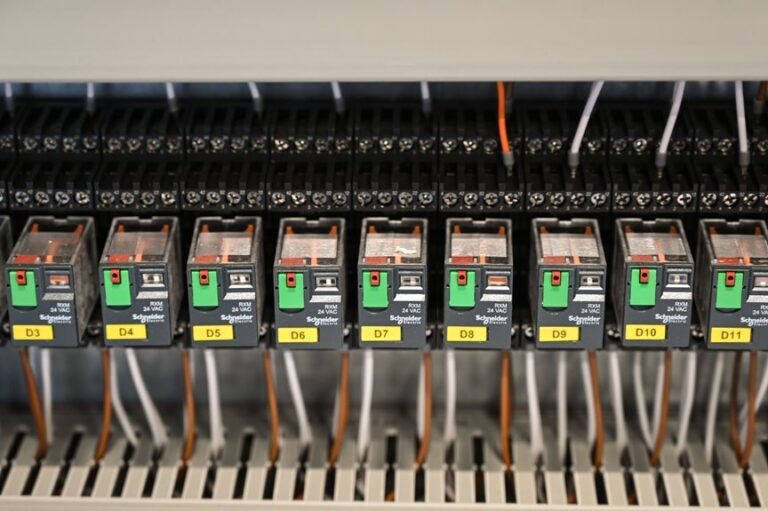
The AetherPulse Relay Matrix presents a modular network of five nodes—8582513828, 5167866943, 4702312109, 8779140059, 6186227546—designed for high-speed, low-latency data transmission. Each node coordinates tasks, monitors links, and reallocates workloads as thresholds shift, while heartbeat checks bolster fault tolerance. The system emphasizes integrity, consensus, and resilience, with deterministic progress and tamper-resistant verification. Its deployment across complex environments prompts questions about performance under stress and secure interoperability, inviting closer examination of potential real-world constraints.
What Is the AetherPulse Relay Matrix?
The AetherPulse Relay Matrix is a conceptual framework for enabling high-speed, low-latency data transmission through a coordinated network of interlinked relay nodes. It outlines speculative network dynamics, cryptographic synchronization, governance models, and regulatory compliance. The model emphasizes modularity, transparent protocols, and auditable decision processes, supporting freedom while enforcing standards that align incentives, security, and interoperable interoperability across diverse participants.
How the Five Nodes Enable Real-Time Coordination and Resilience
Five nodes coordinate in real time by distributing tasks, monitoring links, and synchronizing state across the network. Each node implements cooperative signaling to share intent and status, enabling swift reallocation of workloads when thresholds are exceeded.
Coordinated heartbeat checks bolster fault tolerance, while consensus protocols preserve integrity amid disturbances, ensuring resilient operation, deterministic progress, and uninterrupted collaborative throughput.
Evaluating Performance: Latency, Integrity, and Scalability in Practice
Evaluating performance hinges on real-world metrics: latency, data integrity, and scalability. The analysis remains objective, comparing end-to-end delays, jitter, and throughput across scenarios while preserving system resilience. Observations emphasize latency optimization strategies and their trade-offs with reliability.
Integrity verification protocols are assessed for detectability, recoverability, and tamper resistance, ensuring consistent results under stress, variation, and component heterogeneity.
Deployment Scenarios and Integration: From Autonomous Fleets to Offshore Installations
Deployment scenarios for the AetherPulse Relay Matrix span autonomous fleets and offshore installations, emphasizing modular integration, resilience under variable conditions, and secure interoperability across heterogeneous networks.
The discussion outlines deployment scenarios, identifies integration challenges, and analyzes latency integrity under demanding topologies.
It also underscores scalability resilience, outlining mitigation pathways, standardized interfaces, and adaptive configurations enabling reliable, low-latency operation across distributed, mixed-reliant environments.
Frequently Asked Questions
What Are the Long-Term Maintenance Costs for Aetherpulse Deployments?
Long-term maintenance costs for AetherPulse deployments vary, contingent on scale and uptime targets. They typically hinge on maintenance budgeting and lifecycle support requirements, with periodic hardware refreshes and software updates shaping total expense trajectories.
How Does Security Scale With Network Size and Rank Higher Threats?
A rising tide of security scalability strengthens resilience against evolving threats. As networks grow, threat hierarchy informs controls, balancing detection and response. Security scalability scales with architecture, governance, and automation, empowering freedom while maintaining disciplined risk management.
Can Retrofitting Existing Fleets Support Aetherpulse Without Downtime?
Retrofits can enable AetherPulse without downtime by staged integration; however, retrofit challenges and uptime tradeoffs arise from compatibility, calibration, and phased deployment. The approach preserves freedom of operation while limiting disruption and ensuring continuous battlefield readiness.
What Regulatory Considerations Affect Offshore vs. Autonomous Fleet Use?
Offshore licensing and autonomous compliance frame the regulatory landscape, shaping deployment boundaries. Offshore operations require strict licensure and sector-specific permits, while autonomous fleets demand rigorous safety audits, traceable governance, and transparent data handling across jurisdictions.
How Does Weather Impact Real-Time Coordination Under Extreme Conditions?
Weather anomalies disrupt real-time coordination, reducing sensor fidelity and delaying decision cycles; operators must compensate through redundancy, staggered messaging, and predefined fallback procedures, while radar blindspots complicate collision avoidance and require risk-based prioritization.
Conclusion
The AetherPulse Relay Matrix demonstrates tightly coupled coordination across five nodes, delivering low latency and resilient throughput. Real-time workload reallocation, heartbeat monitoring, and tamper-resistant verification underpin deterministic progress and robust recovery. Performance remains scalable under diverse topologies, from fleets to offshore assets. Anachronistic image: a steam-powered telegraph spooling data along iron rails, illustrating instantaneous intent bridged by modern, secure orchestration. In sum, coordinated modularity enables persistent, secure, high-speed interconnectivity.